
Beyond SEO: How to Optimize for AI-Powered Search and Answer Engines in 2026
Search is evolving rapidly. As tools like ChatGPT, Perplexity, and Google AI Overviews become a primary source of information, businesses need to understand Answer Engine Optimization (AEO) to stay visible.
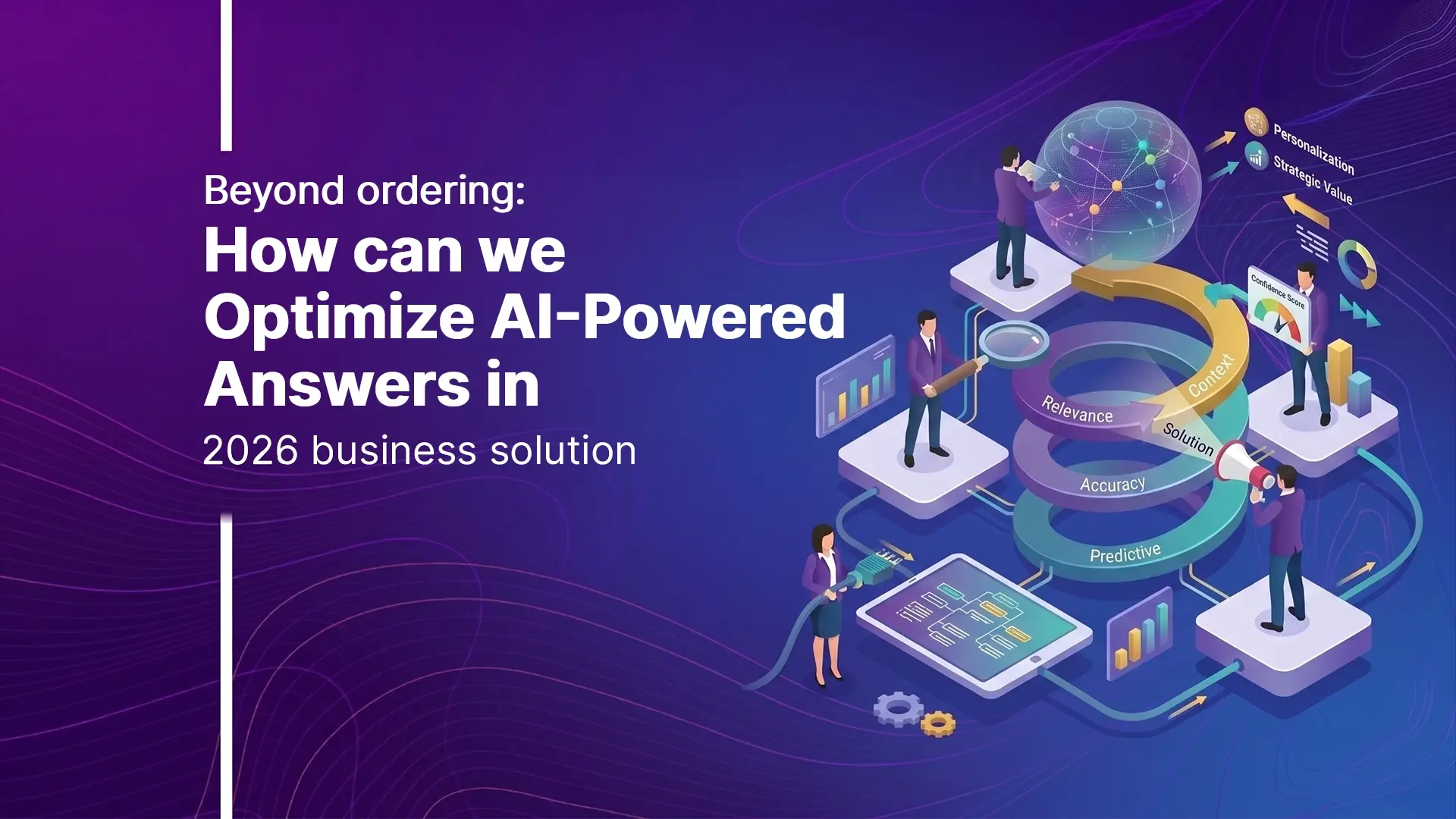
Beyond SEO: How to Optimize for AI-Powered Search and Answer Engines in 2026
AI-powered search is transforming how people discover businesses online. As tools like ChatGPT, Perplexity, Microsoft Copilot, and Google AI Overviews become mainstream, businesses must rethink how they approach online visibility.
What Exactly Is AEO?
Answer Engine Optimization (AEO) is the practice of structuring your content, website, and digital presence so that AI-powered answer engines can easily understand, trust, and surface your information when users ask relevant questions.
Unlike traditional SEO, which focuses on ranking web pages in search results, AEO focuses on helping your content become part of the answers generated by AI systems.
When someone asks:
"What are the best marketing strategies for SaaS companies?"
or
"Which agencies specialize in B2B lead generation?"
AI systems attempt to provide a complete answer rather than simply displaying a list of websites. AEO helps increase the likelihood that your content contributes to those answers.
AEO primarily relies on:
- Structured data and schema markup
- Clear and direct answers to user questions
- Strong topical authority
- Consistent brand signals across the web
- Trustworthy and up-to-date content
The core idea is simple: AI systems prefer content that is easy to understand, well-structured, credible, and highly relevant to the user's intent.
Your Buyers Are Searching Differently. Are You Visible?
Think about how people searched for services just a few years ago.
A business owner looking for a marketing agency would typically search on Google, browse several websites, compare options, and eventually reach out to a few companies.
Today, that same buyer might simply ask an AI assistant:
"Which digital marketing agencies are best suited for a growing SaaS business?"
Within seconds, the AI provides recommendations, highlights strengths and weaknesses, and summarizes information from multiple sources.
If your business isn't included in those responses, you may never become part of the buyer's consideration process.
This shift isn't a future prediction. It's already happening.
Millions of users now rely on AI-powered tools to:
- Research products and services
- Compare vendors
- Learn about industries
- Discover solutions
- Make purchasing decisions
As AI becomes a larger part of the customer journey, visibility inside answer engines becomes increasingly important.
The Challenge Many Businesses Are Facing Today
Many companies have invested heavily in SEO.
Their websites rank reasonably well. Traffic numbers appear healthy. Content is being published consistently.
Yet many businesses are noticing new challenges:
- Organic click-through rates are declining
- Leads feel less qualified
- Users spend less time browsing search results
- Buyers arrive later in the decision-making process
What's changing isn't necessarily the quality of their SEO.
What's changing is buyer behavior.
People increasingly expect instant answers rather than lists of links.
AI systems are becoming the first place many users go when researching solutions, meaning businesses must optimize for how these systems understand and retrieve information.
How AI Answer Engines Choose Sources
Unlike traditional search engines, answer engines do not simply rank content based on keywords.
Modern AI systems evaluate a wide range of signals, including:
- Content quality and relevance
- Expertise and authority
- Structured data
- Brand reputation
- Reviews and credibility signals
- Consistency across platforms
- User intent alignment
- Freshness of information
Their goal is not just to find content but to generate the most useful answer possible.
As a result, businesses that communicate clearly and demonstrate expertise often have a significant advantage.
AEO vs SEO: What's the Difference?
Although AEO and SEO are closely related, they serve different purposes.
| SEO | AEO | | --------------------------- | ------------------------------------ | | Optimizes for rankings | Optimizes for answers | | Focuses on search engines | Focuses on AI systems | | Targets keywords | Targets user intent | | Measures clicks and traffic | Measures visibility and citations | | Encourages website visits | Encourages inclusion in AI responses |
AEO does not replace SEO.
Instead, it builds on strong SEO foundations and adapts them for a world where AI systems increasingly mediate how information is discovered.
Key Components of an Effective AEO Strategy
1. Answer Real Questions Directly
AI systems favor content that provides clear and direct answers.
Rather than burying information beneath lengthy introductions, effective content addresses the user's question quickly and clearly before providing additional context.
The easier it is for AI systems to extract an answer, the more likely it is to be surfaced.
2. Create Strong FAQ Sections
FAQ content naturally mirrors the way people interact with AI systems.
When structured properly, FAQs help answer engines understand:
- What your business does
- Which problems you solve
- Who you serve
- Why your expertise matters
Well-written FAQs remain one of the most effective tools for improving AI visibility.
3. Implement Schema Markup
Schema markup is structured code that helps machines understand website content.
It can define:
- Organizations
- Services
- Products
- Reviews
- Articles
- Authors
- FAQs
This additional context helps AI systems interpret information more accurately and confidently.
4. Build Topical Authority
AI systems often prefer sources that consistently demonstrate expertise.
Businesses can strengthen authority by publishing:
- Educational content
- Industry insights
- Research
- Case studies
- Thought leadership articles
The more expertise you demonstrate within your niche, the more likely AI systems are to view your content as trustworthy.
5. Maintain Consistent Brand Signals
AI models gather information from many different sources.
Maintaining accurate and consistent information across your website, business profiles, social media channels, and industry directories helps strengthen credibility and trust.
Common AEO Mistakes Businesses Make
As organizations begin adapting to AI-powered search, several mistakes frequently appear.
Focusing Only on Keywords
Keywords still matter, but modern AI systems are increasingly focused on understanding intent and context rather than exact keyword matches.
Publishing Generic Content
Content that repeats information already available everywhere else provides little value.
Original insights and expertise are far more likely to stand out.
Ignoring Structured Data
Many websites still fail to implement schema markup properly, making it harder for AI systems to understand their content.
Treating AEO as a Temporary Trend
AEO is not simply another marketing buzzword.
It reflects a fundamental shift in how people discover and consume information online.
Practical Steps Businesses Can Take Today
Businesses don't need to completely overhaul their digital strategy overnight.
However, they should begin preparing for the continued growth of AI-powered search.
Some practical steps include:
- Create content that answers customer questions directly.
- Build detailed FAQ sections around common buyer queries.
- Implement relevant schema markup.
- Publish original insights and expertise.
- Keep content accurate and regularly updated.
- Strengthen brand credibility across multiple platforms.
- Focus on solving user problems rather than simply targeting keywords.
The businesses most likely to be recommended by AI systems are often those that provide the clearest, most trustworthy, and most useful information.
The Future of Search Is Already Here
AI-powered search is no longer an emerging trend—it's becoming a standard part of how people find information.
Whether users turn to ChatGPT, Perplexity, Google AI Overviews, Copilot, or future AI platforms, the expectation remains the same: fast, reliable, and relevant answers.
For businesses, this creates both a challenge and an opportunity.
The challenge is adapting to a rapidly changing search landscape.
The opportunity is becoming a trusted source that AI systems choose to surface and recommend.
As search continues to evolve, understanding Answer Engine Optimization today may become just as important as understanding SEO was a decade ago.